Gulmarg's terrain offers some of the world's most exhilarating skiing, but it comes with significant risks. Unlike managed European or North American resorts, most of Gulmarg's skiable terrain is unpatrolled backcountry. Understanding avalanche safety and proper preparation is essential for every visitor.
Understanding Avalanche Risk
Avalanches are the primary hazard in Gulmarg. The Himalayan snowpack is notoriously unstable due to temperature fluctuations, wind loading, and the depth of snow. The resort provides avalanche control only within marked boundaries—outside these areas, you're in uncontrolled terrain.
Avalanche Danger Scale
Generally safe avalanche conditions. Natural avalanches unlikely.
Heightened avalanche conditions on specific terrain features. Evaluate snow and terrain carefully.
Dangerous avalanche conditions. Careful evaluation essential. Travel in avalanche terrain not recommended.
Very dangerous conditions. Natural and human-triggered avalanches likely. Avoid avalanche terrain.
Avoid all avalanche terrain. Widespread natural avalanches certain.
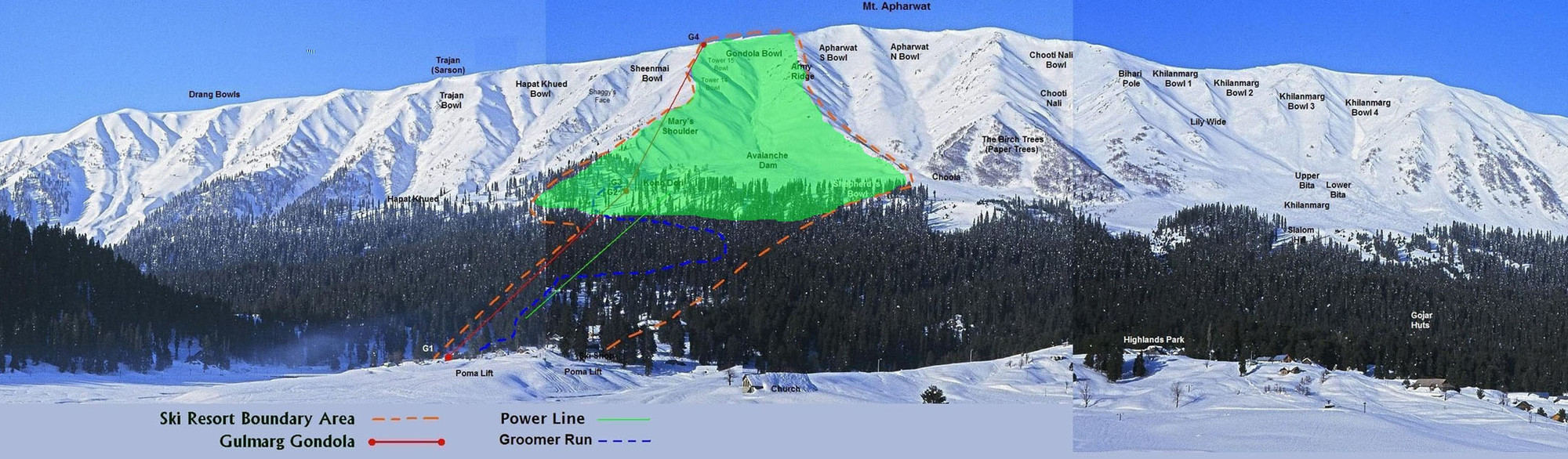
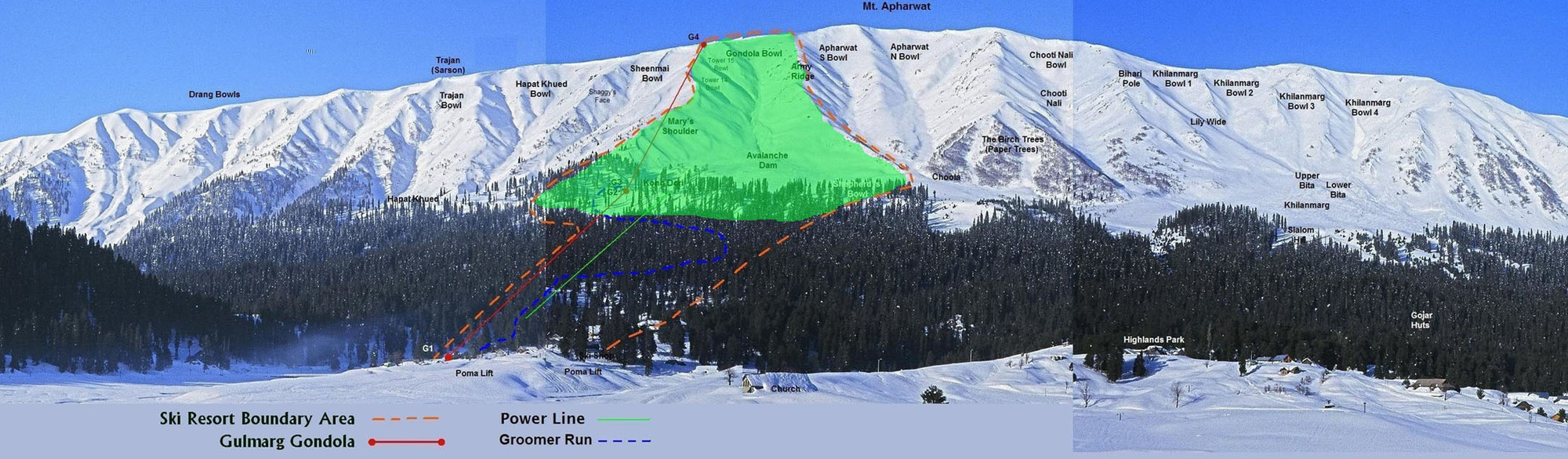
Gulmarg ski area map
Use this map to identify the ski resort boundary, avalanche-controlled areas, and key terrain. Stay inside the marked resort boundary; the green area indicates the avalanche dam zone. The gondola (red line), groomer run (blue dashed), and labeled bowls help with navigation and staying in managed terrain.
High-Altitude Considerations
Gulmarg's ski terrain reaches up to 4,200 meters (13,780 feet). At these altitudes, acute mountain sickness (AMS) is a genuine concern. Symptoms include headache, nausea, fatigue, and shortness of breath.
- Spend your first day acclimatizing—avoid strenuous activity
- Stay hydrated and avoid alcohol for the first 24-48 hours
- Descend immediately if symptoms worsen—altitude sickness can be fatal
- Consider medication like Diamox after consulting your doctor